




Jewelry descriptions frequently blur precise terminology, leaving discerning collectors puzzled by conflicting labels. Retailers often treat “baroque” and “keshi” as interchangeable synonyms to describe any organic, asymmetrical gem. Such casual vocabulary misses a fundamental distinction between external geometry and microscopic origin.
Shoppers encounter both terms across fine jewelry boutiques, yet their gemological meanings inhabit entirely different dimensions. Baroque identifies an outward silhouette, whereas keshi describes a rare cellular journey. Conflating the two obscures why certain organic pearls command exceptional prestige and profound metaphysical reverence.
Untangling this linguistic confusion requires looking beneath the surface luster. Examining internal structure reveals why two pearls sharing an identical organic curve can possess vastly different physical properties, lifespans, and tactile resonance. Gaining clarity on this distinction transforms how you evaluate genuine value, craftsmanship, and long-term durability in quiet-luxury jewelry.
The Geometric Fallacy: Shape Versus Internal Genesis
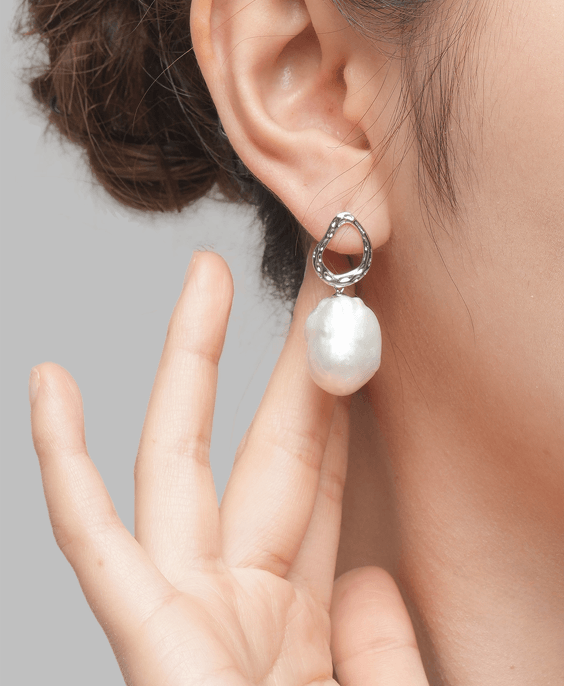
Geometry serves as the jewelry trade’s most visible sorting mechanism. Historically, baroque emerged from the Portuguese barroco, defining an irregular, non-spherical gemstone silhouette. Any pearl deviating from a perfect ball—whether teardrop, button, egg, or blister—technically belongs within the vast baroque family.
Form alone explains almost nothing about what lies hidden within the gem’s heart. Conventional nucleated pearls receive a carved shell sphere inside the mollusk’s soft tissue to dictate shape. Even if the oyster deposits nacre irregularly around that core, producing an asymmetrical contour, that specimen remains an ordinary bead-nucleated baroque pearl.
Differentiating between external contour and internal genesis separates seasoned collectors from casual buyers. Calling a non-spherical gem baroque merely notes its silhouette without clarifying its structural composition. Truly understanding the gem requires asking how that irregular shape developed in the first place. Knowing that back-story reveals whether you are viewing a surface coating or solid treasure.
Genuine keshi gems reject artificial core foundations entirely. While all keshi naturally develop asymmetrical contours—making them baroque in shape—the vast majority of baroque pearls are definitely not keshi. Treating them as identical twins ignores the biological phenomenon that makes genuine non-beaded gems so remarkable.
Inside the Oyster: The Accidental Birth of Baroque Keshi Pearls
Biological serendipity governs the remarkable birth of keshi. Derived from the Japanese word for poppy seed, the name originally described tiny spontaneous pearls formed when an oyster rejected its implanted shell bead. Unable to retain the artificial sphere, the mollusk continued secreting crystalline nacre layers around tiny organic irritants.
Freshwater pearl culturing methods have expanded this magical accident into deliberate artistry. Cultivators introduce delicate mantle tissue without any rigid spherical bead, allowing mollusks to sculpt fluid, freeform shapes at nature’s whim. Each resulting harvest yields singular silhouettes celebrating spontaneous cellular geometry.
Nature works without blueprints when sculpting baroque keshi pearls. Because no spherical template forces an artificial boundary, nacre flows organically, curling into ripples, wing-like paddles, or layered petals. We cherish this lack of human intervention at Wingleam, admiring how each organic curve records an authentic aquatic lifecycle.
Standard baroque pearls carry an artificial core beneath thin outer sheaths, leaving them vulnerable to chipping or peeling over decades. Conversely, non-nucleated formations consist of pure, solid nacre from outer rim to center point. That structural density explains why authentic baroque keshi pearls endure across generations without dulling or degrading.
Pure Solid Nacre and the Radiance of a White Keshi Pearl Necklace
Solid nacre produces an optical phenomenon impossible to duplicate with bead-nucleated alternatives. Because light penetrates uninterrupted through countless translucent aragonite platelets, illumination bounces back from deep within the stone. This inner glow generates exceptional luster coupled with intense, rainbow-like orient that seems to float across fluid contours.
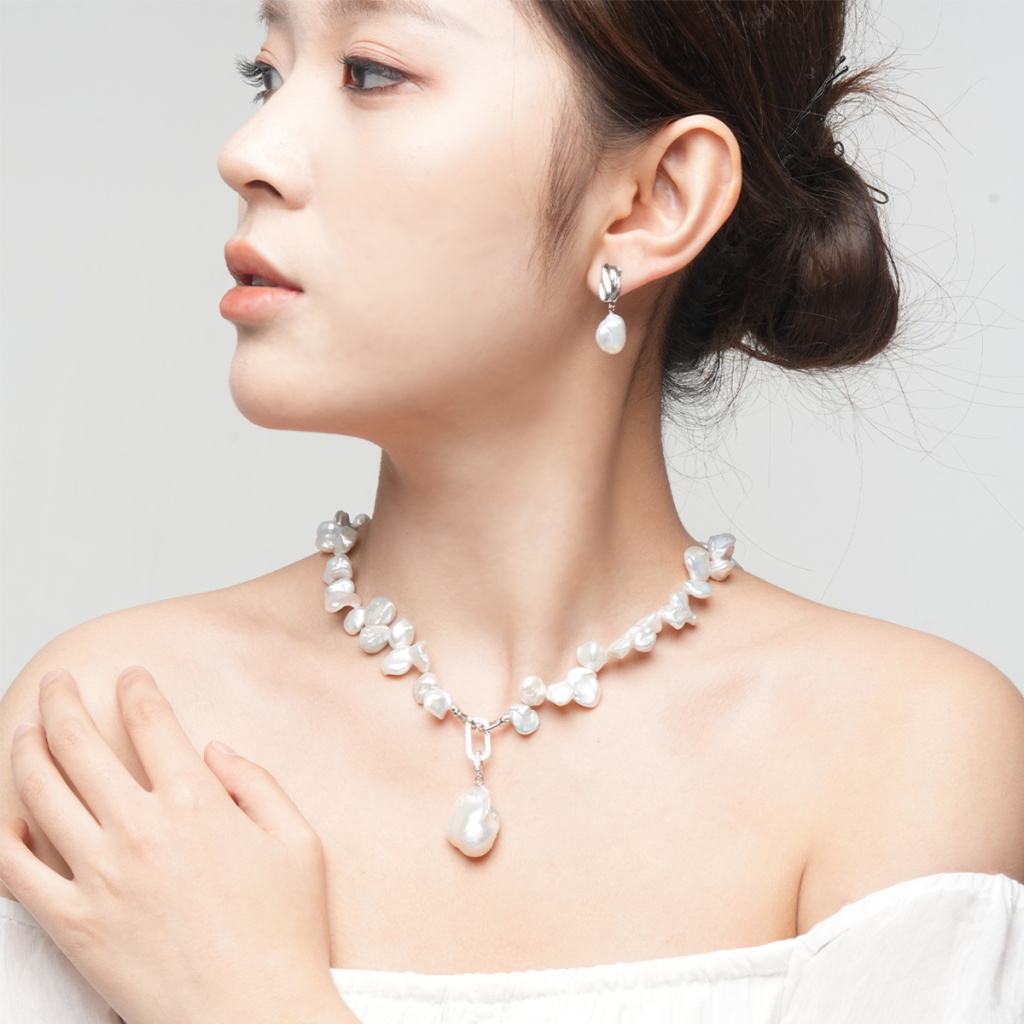
Draping a white keshi pearl necklace against warm skin reveals this luminous distinction immediately. Instead of projecting a flat, uniform shine, each irregular petal mirrors ambient light from shifting angles as you move. The gems ripple like sunlight across tidal pools, delivering a dynamic radiance that feels alive.
Artisans must navigate unique balance requirements when assembling freeform gems into wearable jewelry. Stringers at Wingleam meticulously hand-knot resilient silk cord between undulating petals, ensuring adjacent curves nestle harmoniously without abrading one another. Fine 14k gold-plated accents secure the fluid composition, providing graceful, secure drape.
Wearing a white keshi pearl necklace transforms daily dressing into a celebration of deliberate contrast. The non-uniform profile dismantles conservative dowdiness, creating effortless elegance whether paired with a relaxed linen shirt or tailored silk blouse. Generous organic scale delivers dramatic visual interest while maintaining whisper-quiet refinement.
Curating Organic Irregularity as Personal Expression
Selecting jewelry today has shifted from displaying conventional status to expressing personal authenticity. Perfectly round spheres once represented the pinnacle of luxury, signaling mechanical uniformity and rigid social propriety. Modern self-purchasing women increasingly reject manufactured perfection in favor of pieces that mirror individual complexity and emotional truth.
Eastern philosophical traditions celebrate wabi-sabi, the enduring aesthetic philosophy that finds supreme beauty in imperfection and impermanence. Freeform pearls embody this worldview effortlessly, proving that organic irregularities possess greater soul than flawless symmetry. Each asymmetry reflects natural forces working in unhurried, patient harmony.
The Beauty of Imperfection: A Natural Expression of Individuality
Metaphysically, solid water-element gemstones offer an intimate sense of emotional grounding. Touching the cool, undulating surface of solid nacre calms mental chatter, serving as a quiet reminder of personal resilience. Our design philosophy at Wingleam honors these talismanic qualities, creating enduring jewelry designed to anchor modern women.
Recognizing the boundary between shape and genesis empowers smarter collecting decisions. Baroque identifies an aesthetic contour, while keshi guarantees rare non-nucleated substance and generational durability. Embracing that difference ensures you choose jewelry celebrated not just for its striking silhouette, but for the untamed natural miracle resting at its core.