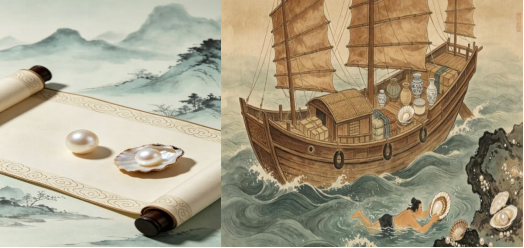
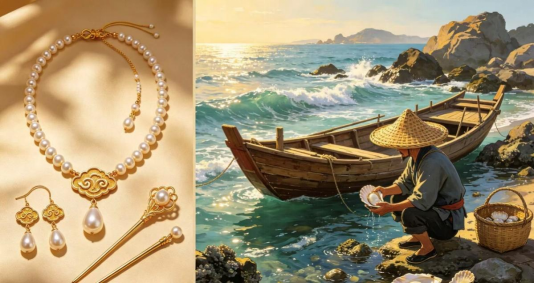
China is the world’s earliest country to harvest, utilize, and cultivate pearls. “Southern Pearls” (HePu seawater pearls) and freshwater pearls have been passed down in parallel for over 4,000 years, forging a unique Eastern pearl civilization.
I. Pre-Qin Period (approx. 16th century BCE—221 BCE)
The Shangshu: Yugong records that “the Huaiyi people harvested pearls and fish,” listing natural pearls from the Huai River as tribute items during the reign of Yu the Great of the Xia Dynasty—this is the earliest written record of pearls in China. At that time, pearls were regarded as ancient treasures, primarily used in the crafting of ritual vessels and as adornments for the nobility, fully embodying their prestige.
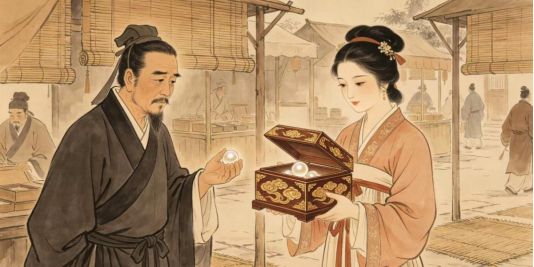
Pearls became valuable gifts exchanged among feudal states and commodities in cross-border trade, with their circulation expanding continuously. The well-known idiom “buying the box and returning the pearl” originated during this period, serving as vivid evidence of the pearl’s precious value.
II. The Qin and Han Dynasties (221 BCE–220 CE): The Formal Rise of Southern Pearls
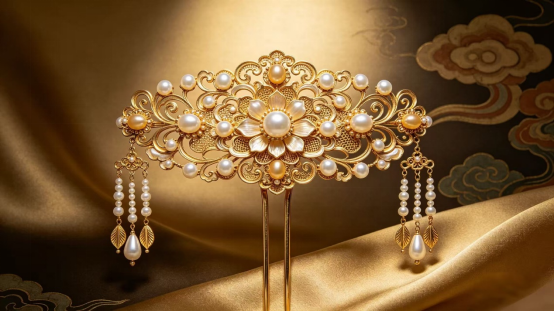
Hepu (present-day Beihai, Guangxi) became the core production area for Chinese saltwater pearls (Southern Pearls), establishing their dominant status for over a thousand years; the imperial court established Zhuyai Commandery in Hainan to exclusively manage pearl harvesting affairs. Pearls were used to craft imperial crowns, court robes, and Buddhist statues, becoming important symbols of imperial authority and social status, and were exported to countries across Southeast and South Asia via the Maritime Silk Road.
III. From the Wei and Jin Dynasties to the Song Dynasty: The Great Invention of Cultured Pearls (AD 220–1279)
Northern and Southern Dynasties (420–589)
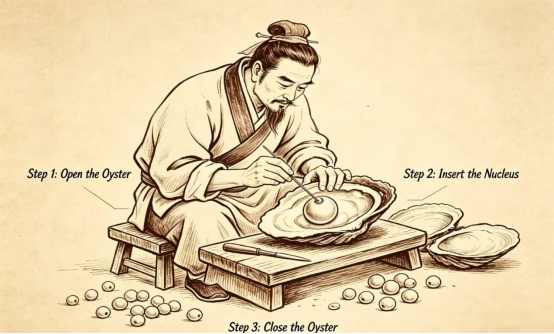
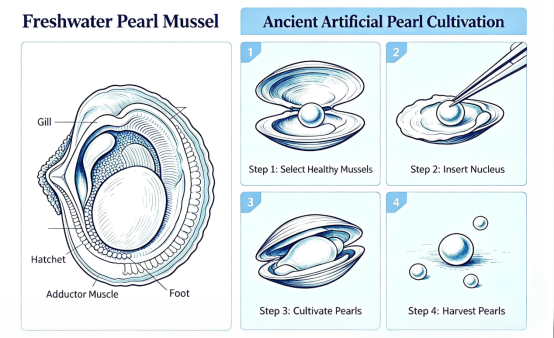
The rudiments of cultured pearl production emerged in China. Ancient people induced pearl formation by implanting nuclei or foreign objects into clams, pioneering the world’s first cultured pearl farming and propelling the pearl industry from natural harvesting to artificial cultivation.
Tang Dynasty (618–907)
The imperial court established a dedicated “Pearl Official” responsible for pearl taxation and industry management; “Northern Pearls” (freshwater pearls) produced in the northeast were highly sought after by the imperial family and nobility for their lustrous texture, becoming treasures exclusive to the imperial court.
Song Dynasty (960–1279): A Milestone in Pearl Cultivation
Pang Yuanying’s Miscellaneous Records of Wenchang provides a detailed account of the world’s earliest mature artificial pearl cultivation techniques, marking the systematization of China’s artificial pearl farming technology and leaving a significant mark on the history of global pearl development.
IV. Ming and Qing Dynasties: The Golden Age of Southern Pearls and the Rise of Freshwater Pearls (1368–1912)
Ming Dynasty (1368–1644): Southern Pearls Reach Their Zenith
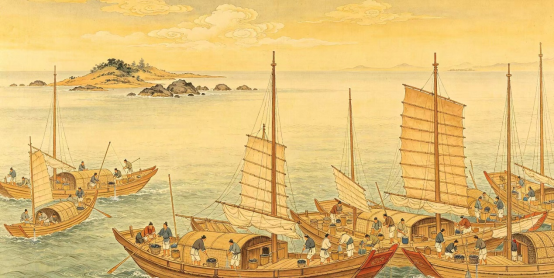
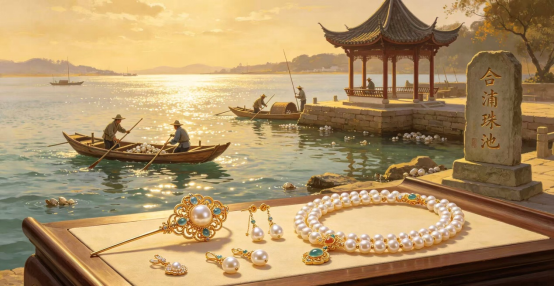
In the 12th year of the Hongzhi reign (1499), the imperial court organized 800 ships and over 8,000 people to harvest pearls in Hepu, ultimately yielding 28,000 taels—setting a historical record for pearl harvest; The imperial court established a specialized administrative office in Hepu to manage the pearl ponds. The industry adage that “Eastern pearls are inferior to Western pearls, and Western pearls are inferior to Southern pearls” has endured to this day, cementing the unshakable preeminent status of Southern pearls.
Qing Dynasty (1636–1912):
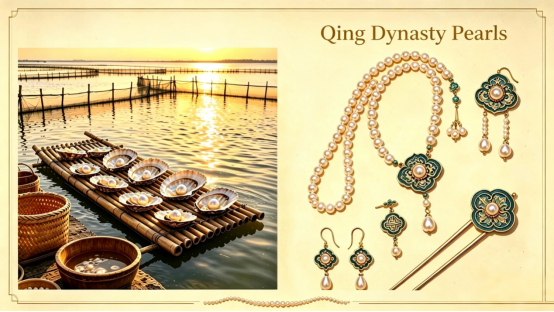
Freshwater pearl farming developed on a large scale in the Taihu Lake region of Jiangsu and Zhejiang, as well as around Huzhou, marking the rise of freshwater pearls; meanwhile, resources for Northern pearls in Northeast China gradually depleted due to excessive and indiscriminate harvesting. During the late Qing Dynasty, frequent wars and social unrest led to the gradual decline of traditional pearl harvesting and artificial pearl farming industries.
V. Modern and Contemporary Periods: The Revival of Chinese Pearls and Global Leadership (1949–present)
1958
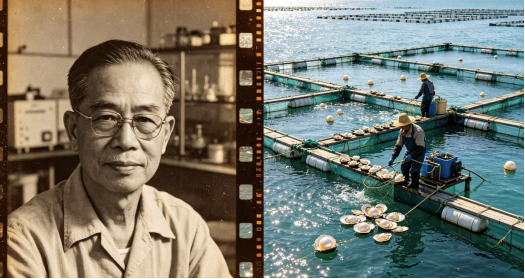
Pearl cultivation expert Xiong Daren successfully cultivated China’s first modern saltwater cultured pearl in Hepu, ushering in the revival of China’s pearl industry.
1960s–1970s
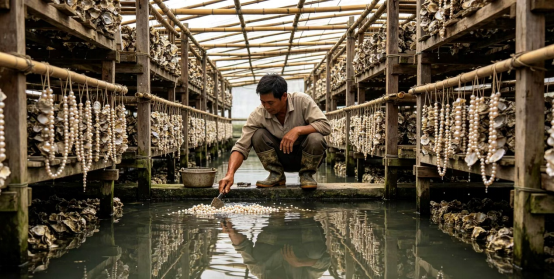
Regions such as Zhejiang, Jiangsu, and Hunan successively achieved breakthroughs in freshwater nucleus-free pearl cultivation technology, leading to rapid development of the freshwater pearl industry.
1980s to Present
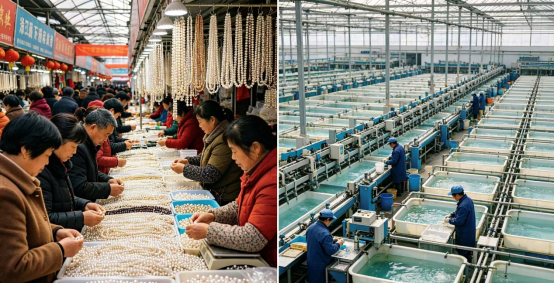
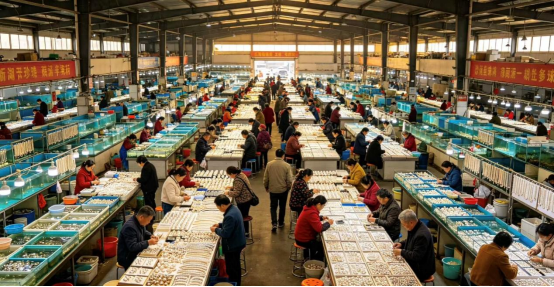
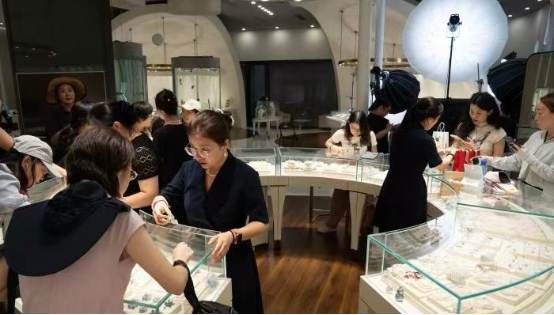
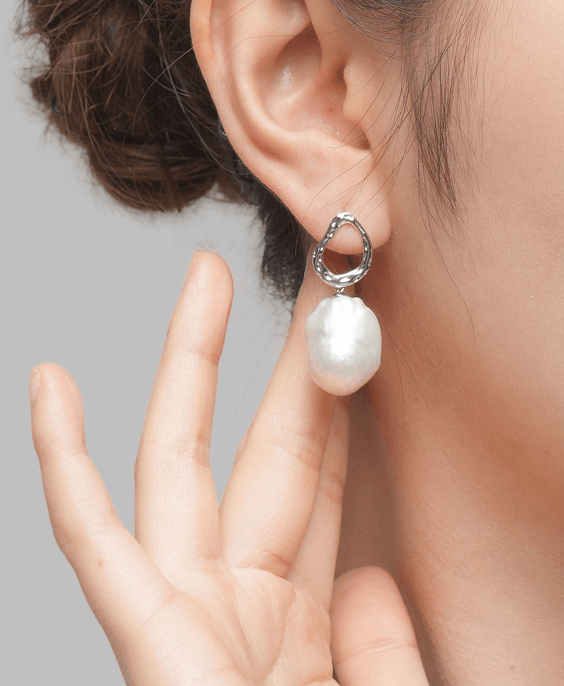
Shangxiahu in Zhuji, Zhejiang, has developed into the “Pearl Capital of the World,” becoming the globe’s largest hub for pearl cultivation, processing, and trade. Today, China accounts for over 95% of global pearl production, with freshwater pearls holding an absolute dominant position. China leads the world in cultivation technologies for nucleated freshwater pearls, Edison pearls, colored pearls, and irregular-shaped pearls, establishing itself as the core force in the global pearl industry.
VI. Key Aspects of Chinese Pearl Culture
Cultural Symbolism
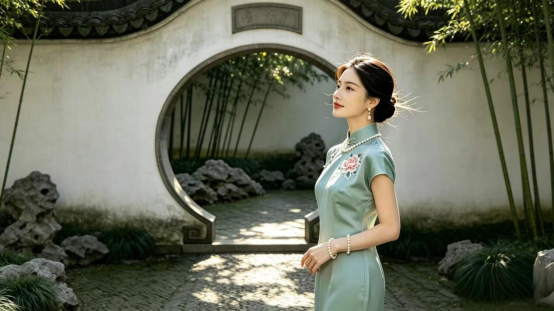
In traditional Chinese culture, pearls symbolize purity, wealth, good fortune, and perfection. As a vehicle for auspicious meanings and refined taste, they are deeply cherished by the Chinese people.
Medicinal Value
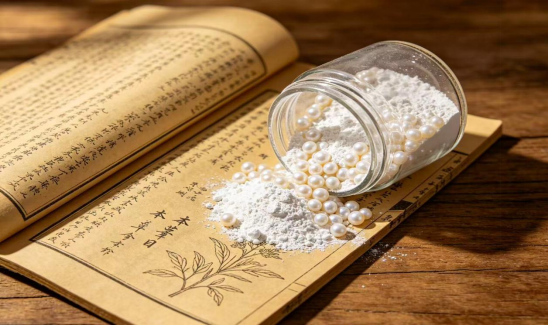
According to the *Compendium of Materia Medica, pearls have the effects of calming the mind and alleviating anxiety, nourishing the complexion and moisturizing the skin, and improving eyesight while clearing corneal opacities. As a traditional and precious Chinese herbal medicine, they possess both aesthetic and practical value.
Classic Historical Anecdotes
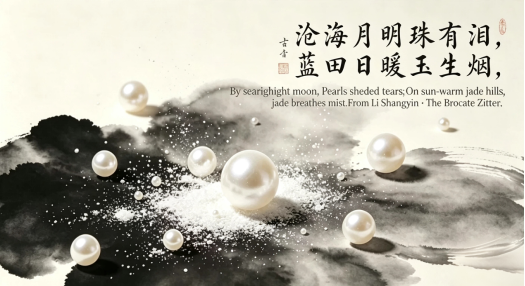
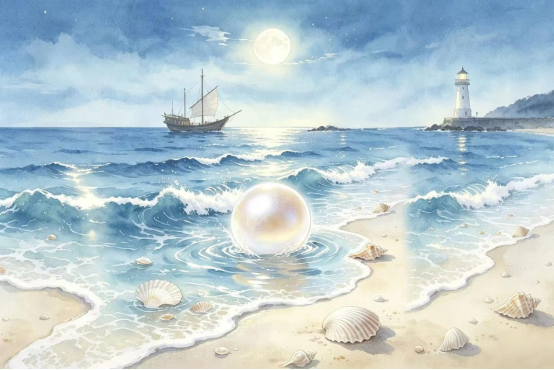
Chinese historical anecdotes that have been passed down for thousands of years—such as “The Return of the Hepu Pearl,” “The Pearl Weeps Under the Moon over the Vast Sea,” and “Buying the Box and Returning the Pearl”—have woven pearls into the very fabric of Chinese culture, making them an important symbol of Eastern aesthetics and humanistic spirit.