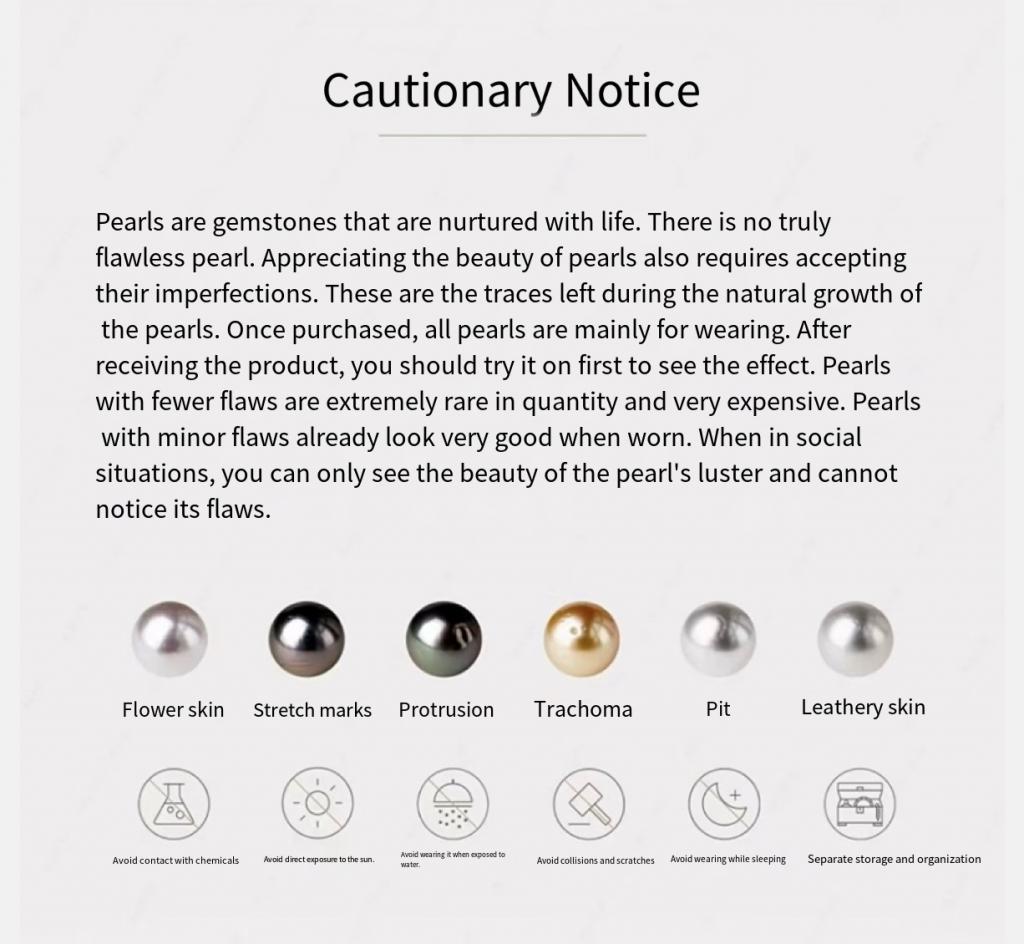
Although pearls originate in water, they form inside mussels and are naturally isolated from water by soft tissue. Pearl surfaces feature microscopic pores that absorb moisture easily, leading to peeling and cracking of the nacre layer.
In addition, pearl threading is susceptible to mildew and brittleness. Do not wear pearls while showering, swimming, soaking in hot springs, or engaging in strenuous exercise with heavy perspiration.
If pearls accidentally become wet, gently dry them with a clean, soft cloth, and allow them to air-dry in a cool, ventilated area. Then store them in a jewelry box. Never expose pearls to direct sunlight or high-temperature hair dryers.
Keep Away from Oil and Grease
Pearl micropores readily absorb kitchen fumes and grease residue. Long-term exposure dulls their luster and causes yellowing. Avoid wearing pearls while cooking or in steamy environments.
Avoid Chemical Substances
Pearls are highly sensitive to acids and alkalis. Contact with the following substances will erode the pearl surface, resulting in dullness, discoloration, or darkening:
Vinegar, alcohol, and perfume.
Skincare and cosmetic products.
Metal polishing solutions and strong cleaning agents.
Special Notes
Never clean pearls with alcohol pads.
Never use industrial metal cleaners.
Keep Away from Hard Objects
Pearls are soft organic gemstones with a Mohs hardness of 2.5 to 4.5, being slightly harder than human nails yet significantly softer than glass. Therefore, pearls are extremely prone to scratches.
Care Recommendations
Store pearls separately from diamonds, gold, and hard gemstones.
Preserve pearls in a soft pouch or a lined jewelry box.
Avoid stacking or colliding pearl jewelry with other accessories.